Get in touch
Download Brochure
Download Guide
Get in touch
NASHVILLE HAS LANDED

Introducing Cam on Third
Invest in one of America’s fastest-growing cities, with studios, 1 & 2-bedroom apartments from $299,950.


Property Investment in Liverpool Guide (2026)


In this article
Property Investment in Liverpool Guide (2026) Why Rental Demand Isn't Going Anywhere Area-by-Area: Where to Invest in 2026 The Regeneration Engine: Billions Already Moving What the Numbers Mean for a First-Time Investor The Medium-Term Outlook Practical Next Steps for a First-Time InvestorWith average yields running at 6–8%, house prices still well below the national average, and billions in regeneration capital reshaping the city's northern waterfront, Liverpool continues to make a compelling case for the first-time investor. Here is everything you need to know before committing capital.
KEY TAKEAWAYS |
Liverpool's average house price stands at £177,000 (ONS, February 2026), 34% below the UK average of £268,000, making entry costs among the lowest for any major UK city. |
Private rents rose 6.4% year-on-year to £893 per month (March 2026), outpacing North West regional growth and compressing yields further in favour of landlords. |
Savills forecasts 27.6% cumulative price growth across the North West from 2026 to 2030, the highest regional projection in the UK, anchored partly by Liverpool's regeneration pipeline. |
Over £8 billion in committed development, Liverpool Waters, the Knowledge Quarter, Ten Streets, and the new Baltic station, is actively reshaping the supply and demand balance across multiple postcodes. |
Why Liverpool, and Why Now?
There is a particular type of investor who gets to a city just as the scaffolding comes down and the cranes are still swinging. In Liverpool right now, that investor is not early and is not late, they are, by most credible measures, precisely on time. The city's property market has spent the better part of a decade quietly outperforming, and 2026 finds it at a key turning point: regeneration is moving from planning documents into steel and concrete, rental demand is tightening, and the national capital flows that long favoured London are shifting north with unusual conviction.
The headline numbers tell part of the story. According to ONS data published in 2026, the average house price in Liverpool reached £177,000 in February, up 3.6% on the year before. That is fractionally ahead of the wider North West (3.4%) and comfortably above the national pace of 1.2%. More to the point, it is still less than 66% of the UK average, meaning the affordability argument, the one that draws investors north in the first place, remains very much intact.
For context, a typical terraced house in Liverpool can be acquired for around £163,000 as a first-time buyer entry, while the same money in Manchester, Leeds or Birmingham would leave you priced out of most investment-grade stock. That gap is narrowing, but it has not closed.
AVERAGE HOUSE PRICE | RENTAL GROWTH (YoY) | NORTH WEST FORECAST |
£177,000 (ONS, Feb 2026) | 6.4% (ONS, Mar 2026) | 27.6% by 2030 (Savills) |
34% below UK average of £268,000 | £893/mo avg rent, above NW rate of 5.7% | Highest regional growth forecast in the UK |
Why Rental Demand Isn't Going Anywhere
In Liverpool, the numbers are robust enough to withstand scrutiny. ONS private rental data for March 2026 shows average rents in the city at £893 per month, having risen 6.4% over twelve months. That annual growth rate is faster than the 5.7% recorded across the North West as a whole, and nearly five times the pace of general inflation at the time of writing.
The city has a kind of tenant base that won’t disappear overnight. Liverpool has more than 70,000 students enrolled across the University of Liverpool, Liverpool John Moores, Liverpool Hope, and LIPA, a figure that ensures consistent occupancy in postcodes within a two-mile radius of the campuses. The NHS employs tens of thousands at the Royal Liverpool University Hospital, Aintree, and the Alder Hey complex. And a growing cohort of young professionals, many retained graduates from the city's own institutions (the graduate retention rate exceeds 75%, according to Savills research), has steadily shifted demand from purely student lettings toward more professionally oriented stock.
Jennifer Lawler, sales director at Elite notes "The strongest argument in favour of buying a rental property now in Liverpool is that purchase prices remain low by UK standards while rental demand continues to grow, with average rents up year-on-year and vacancy rates staying tight."
Vacancy rates in high-demand postcodes, Anfield, Wavertree, Kensington, have remained notably low throughout 2025 and into 2026. Investropa's 2026 market analysis recorded rents rising 8.3% year-on-year in the strongest parts of the city, well ahead of any financing cost increases an investor using a mortgage would face.
Area-by-Area: Where to Invest in 2026
Liverpool is not a single market. The city's 20-odd distinct postcodes behave very differently from one another, and the investor who treats L1 the same as L8 or L4 the same as L15 will get their returns wrong in both directions. The table below sets out the key trade-offs between yield and capital growth potential across the city's principal investment areas:
Area | Gross Yield | Entry Price | Annual Growth | Best For |
Anfield & Kensington (L4/L7) | 7–8% | From £118k–£130k | ~7–9% | Cash flow, families, NHS workers |
Baltic Triangle (L1/L3) | 5.5–6.5% | From £190k–£230k | ~8–10% | Capital growth, young professionals |
Wavertree (L15) | 6.5–7% | From £150k–£180k | ~5.5% | Students, reliable income |
Kensington / Everton (L6/L5) | 7–8% | From £118k–£140k | ~6–8% | High yield, low entry |
Knowledge Quarter (L7) | 6–7% | From £180k–£220k | ~7.5% | Life sciences, professionals |
Toxteth (L8) | 6.5–7% | From £140k–£165k | ~6% | Balanced income & growth |
The area-level picture that emerges from current market data is more nuanced than headline figures suggest. Kensington and Anfield represent the highest-yielding end of the spectrum, gross yields running between 7% and 8%, with entry prices regularly below £130,000 for terraced houses. These are not glamorous postcodes, but they are where the mathematics of rental investment work most straightforwardly for a landlord focused on cash flow from day one.
The Baltic Triangle occupies a different position. Yields here sit closer to 5.5–6% on standard long lets, but the area's character as Liverpool's principal creative, hospitality and nightlife quarter makes it one of the strongest locations in the city for short-term let strategies.
Properties with short-term let approval can achieve gross yields of up to 12%, driven by consistent leisure and event demand from the wider waterfront and cultural offering. For investors willing to work with a specialist short-term management operator, the return profile here is materially different from the headline long-let figures.
On top of that, annual price growth of 8–10% means the total return picture is compelling for anyone with a longer horizon. The area has been transformed over the past decade from a derelict industrial district into one of the city's most energetic quarters, and with the approved £100 million Liverpool Baltic station set to open by 2027, the infrastructure case for continued appreciation is well-founded.
The Regeneration Engine: Billions Already Moving
Regeneration narratives are easy to oversell. In Liverpool's case, the projects already underway are substantial enough that an investor need not rely on future promises, they can simply look out of the window.
The most significant scheme is Liverpool Waters, a £5.5 billion, 30-year masterplan to transform 60 hectares of derelict northern dockland into a mixed-use waterfront neighbourhood. The new Everton Stadium at Bramley-Moore Dock, which opened for the 2025/26 football season and draws over 1.4 million additional visitors to the city each year, anchors the northern end of this development. The Central Docks phase, supported by £56 million in Homes England funding approved by HM Treasury, will deliver around 2,350 new homes, a five-acre Central Park, and substantial public infrastructure works.
To the east, the Knowledge Quarter spans 450 acres and has attracted over £1 billion in regeneration investment to date, with a further £1 billion in the pipeline. The Paddington Village development, a £1 billion mixed-use scheme focused on life sciences and digital technology, has been bolstered by a £160 million Government cash injection to establish a Life Sciences Investment Zone. This is a capital-backed economic transformation that creates both jobs and housing demand in a tight radius.
Further north, the Ten Streets initiative covers 125 acres between the city centre and Bramley-Moore Dock, with £500 million in projected investment and a target of 2,500 new jobs. Meanwhile the £1 billion King Edward Triangle scheme on the northern waterfront, a cluster of high-rise residential buildings, hotels, and an events arena, has its first planning applications already submitted with detailed phasing expected throughout 2026 and into the early 2030s.
For the investor, the practical implication is this: regeneration corridors in Liverpool are well-defined, well-funded, and well-progressed. Buying adjacent to confirmed infrastructure, rather than speculative hope, is the difference between a calculated position and a gamble.

What the Numbers Mean for a First-Time Investor
Realistic entry costs
A first-time buyer in Liverpool can acquire investment-grade stock for as little as £118,000–£163,000 in higher-yield postcodes. On a standard 25% buy-to-let deposit, that implies a cash commitment of £29,500–£40,750, with stamp duty adding a further £4,000–£5,000 on properties below £250,000 (plus the 3% buy-to-let surcharge applicable as of 2026). Investropa estimates total round-trip transaction costs, stamp duty, legal fees, agent commission, at roughly 8–12% of property value, or £15,000–£22,000 on a typical £181,000 purchase. A holding period of at least five years is therefore necessary to absorb these costs and return to profit, even before factoring in capital growth.
Gross versus net yield
It bears emphasis that the 6–8% yields cited across Liverpool are gross figures. Net yields, after allowing for lettings management (typically 10–15% of rent), maintenance, insurance, licensing fees, and voids, will run 1.5–2.5 percentage points lower. A gross yield of 7.5% in Anfield translates to a net yield closer to 5–6% in a well-managed portfolio, still well above the national average, but not the same number. Any projection that does not distinguish between the two deserves scrutiny.
Selective licensing
Liverpool City Council operates selective licensing schemes across several of its higher-density rental postcodes, including parts of L4, L5, L6, and L7. A licence is required for any privately rented property in a designated zone, costs around £500–£700 per property over a five-year period, and comes with minimum property standards obligations. The schemes are broadly considered to have improved stock quality and tenant confidence in affected areas, but a first-time investor needs to account for them in their due diligence before exchange.
The Medium-Term Outlook
Savills forecasts 27.6% cumulative growth for the North West between 2026 and 2030, the highest projection of any UK region. That figure is underpinned by the same forces that are visible on the ground in Liverpool today: constrained housing supply relative to employment growth, a young and growing population (Liverpool's metro area reached approximately 935,000 in 2026, up 0.65% on the previous year), and a regeneration pipeline that will continue delivering economic stimulus for at least the next decade.
More conservatively, near-term projections for 2026 cluster around 2–5% price growth, consistent with the 3.6% ONS figure already recorded in the year to February. That is a sober, credible range, not boom-time numbers that invite caution, but steady, real appreciation that compounds meaningfully when combined with rental income.
The single largest upside variable remains interest rates. The Bank of England base rate trajectory through 2026 will materially affect both buyer affordability and investor financing costs. Even a 0.5 percentage point reduction in mortgage rates unlocks a meaningful cohort of additional purchasers, which in a relatively thin market like Liverpool's higher-yield postcodes translates quickly into price pressure.
The principal downside risk, as it has been for several years, is oversupply in specific micro-markets, particularly city-centre flatted developments, where planning permissions have been issued more liberally than market absorption can comfortably accommodate. Outside that segment, the supply picture remains tight, and the fundamentals support the positive outlook that credible analysts have maintained.
Practical Next Steps for a First-Time Investor
The preparation required before buying an investment property in Liverpool is not especially complex, but it rewards thoroughness. Begin by establishing a buy-to-let mortgage agreement in principle, most lenders will require a minimum 25% deposit and assess affordability based on projected rental income covering 125–145% of the mortgage payment. This step defines your actual budget before you start looking at stock, which saves considerable time and prevents the disappointment of falling for a property that the numbers cannot support.
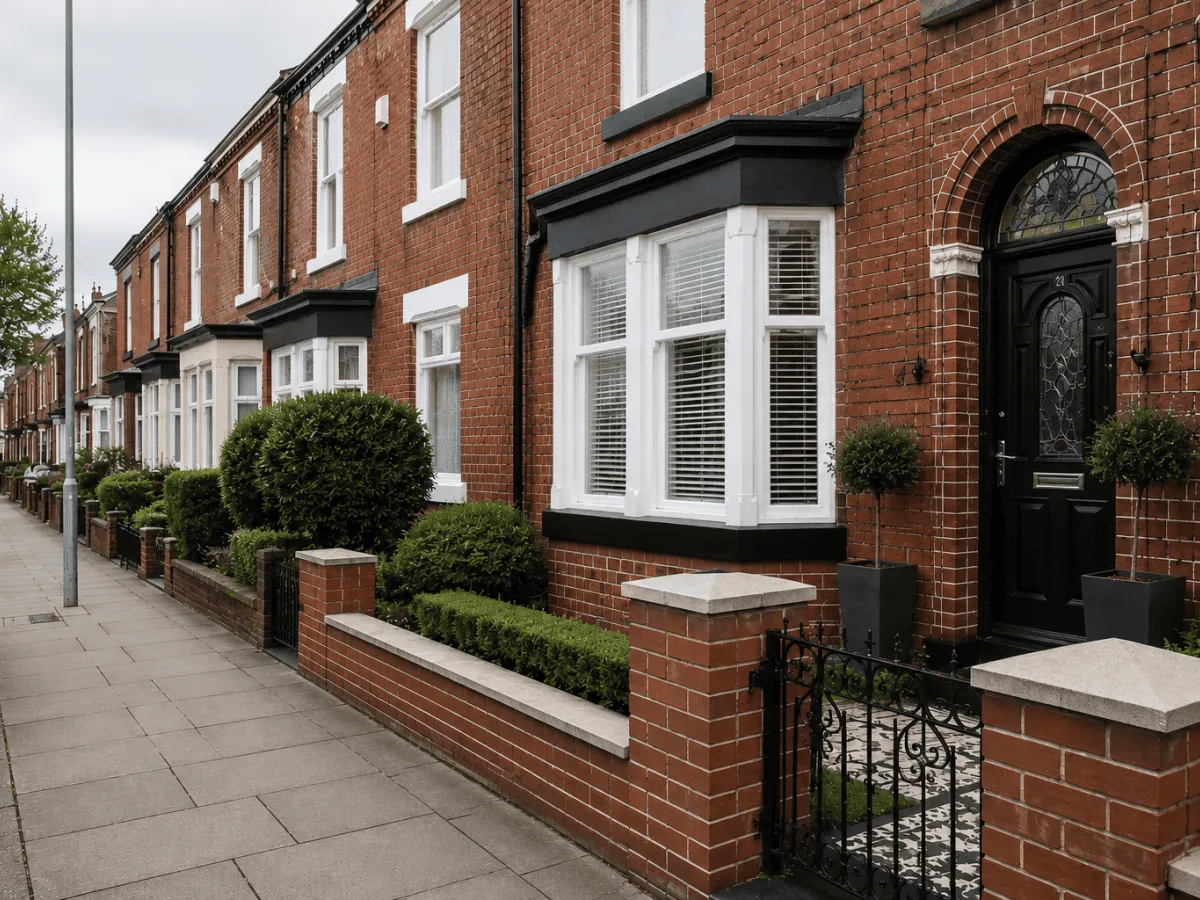
Select a solicitor with genuine experience of Liverpool investment transactions. The selective licensing landscape and leasehold considerations in some city-centre blocks require local knowledge that a generalist conveyancer may not have. Budget for a full building survey on any property over fifteen years old; the Victorian terrace stock that dominates Liverpool's best-yielding postcodes can conceal damp, structural movement, and roof issues that an inspection will surface before you are committed.
Choose your management approach before you exchange. Self-managing from outside the city is possible but underestimated in its demands; the cost of a professional lettings agent, typically 10–15% of rent for full management, is almost always worthwhile for a first investment, as it provides the operational infrastructure that protects yield consistency and tenant quality.
And finally, think about the exit from the beginning. Liverpool property has strong owner-occupier demand in most of its investment-grade postcodes, a well-maintained terraced house in Wavertree or Anfield can be sold to a first-time buyer as readily as to another investor. That dual exit route is an important piece of portfolio liquidity that newer, purpose-built investment blocks in city centres often cannot offer in the same way.
Liverpool, in 2026, is a city that rewards the investor who does their homework and arrives with realistic expectations. The yield is real, the regeneration is funded, and the affordability gap relative to the rest of the UK remains wide enough to carry a meaningful margin of safety. That combination, in the current environment, is rarer than it looks.
This article is produced for informational purposes only and does not constitute financial or investment advice. Property values can fall as well as rise.Past performance is not indicative of future results. Seek independent financial advice before making investment decisions.