Get in touch
Download Brochure
Download Guide
Get in touch


Velocity, Trafford: Manchester’s Newest Development
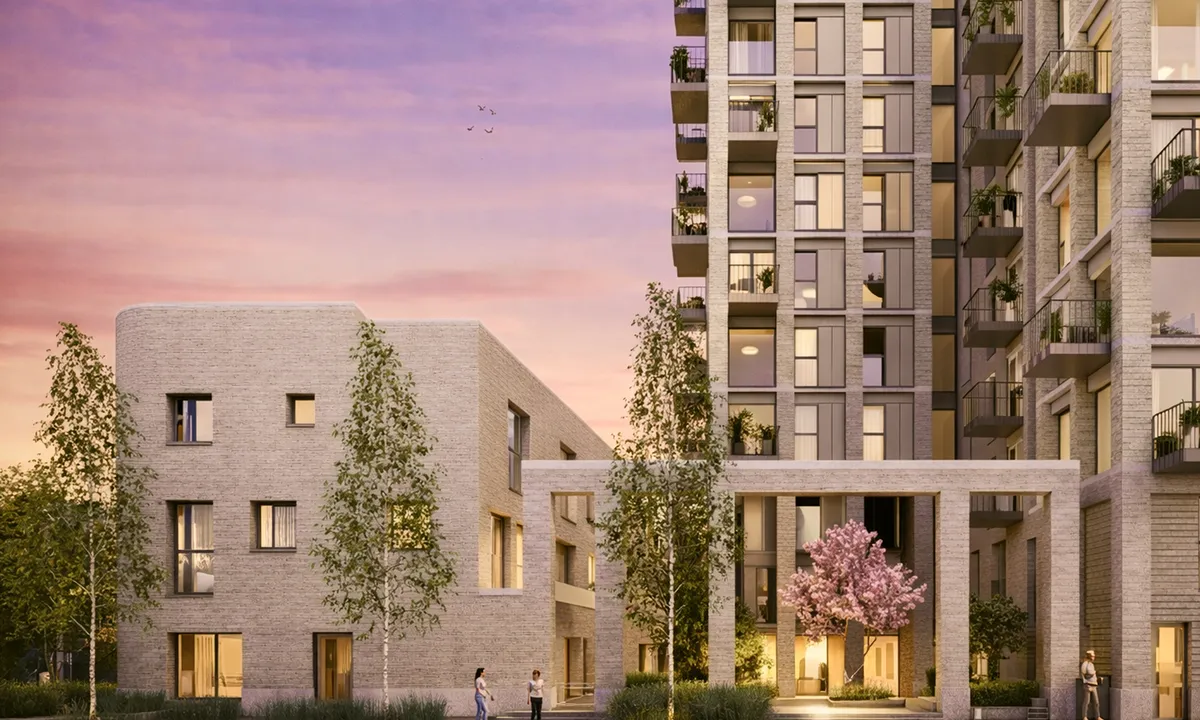

Velocity, a 102-home scheme of one and two-bedroom apartments and townhouses in the heart of Trafford, is priced from £209,900 in a borough where the average house price stands at £397,000 and average private rents run at £1,367 a month. The distance between those two figures, rather than any expectation of rapid price growth, is what makes the scheme worth examining.
- Velocity is a 102-unit development of one and two-bedroom apartments and townhouses in Trafford, Manchester, with prices from £209,900 and estimated yields of up to 6%. Full specification on the Velocity development page.
- Entry pricing sits well below the Trafford average house price of £397,000, while average private rents in the borough run at £1,367 a month, effectively level with the city of Manchester and well above the North West average of £965.
- Savills’ most recent revision, published in May 2026, forecasts 25% capital growth in the North West over the five years to 2030 against a UK average of 18.5%.
Two things tend to happen when a new Manchester development launches. The first is a rush of headline yield figures with little context behind them. The second is a location argument that treats the whole of Greater Manchester as interchangeable. Velocity is worth examining more carefully than that because the case for it rests on a specific and measurable feature of the Trafford market rather than on general enthusiasm for the North West.

Velocity: 102 apartments and townhouses in Trafford
Velocity is a new residential scheme in Trafford delivering 102 homes across a mix of one and two-bedroom apartments and townhouses. One-bedroom apartments start at £209,900, two-bedroom apartments at £315,825, and townhouses at £395,960. Amenity provision includes a rooftop terrace and lounge, a wellness suite, a pocket garden and cycle storage.
The townhouse element is the more unusual part of the mix. Urban Manchester schemes of this scale are overwhelmingly apartment-led, so a small run of townhouses widens the potential tenant pool beyond young professionals to include sharers and small households who would otherwise be looking at older stock in the surrounding suburbs. It may also broaden eventual resale appeal beyond investors, giving the scheme a more varied unit mix than an apartment-only development.
The pricing argument in numbers
Trafford is not a cheap borough. Office for National Statistics figures put the average house price there at £397,000 in June 2026, up 9.7% year on year, with first-time buyers paying an average of £320,000. That is around 58% above the average for the city of Manchester, which stood at £251,000 in June 2026. Local house price estimates are provisional and based on a smaller sample than the national figures, so the ONS advises reading them over a year or longer rather than month to month.
Against that backdrop, a one-bedroom apartment at £209,900 buys into a borough where the average transaction is close to double that figure. The relevant point for income is what happens on the rental side. Average private rents in Trafford reached £1,367 a month in July 2026, almost exactly level with Manchester at £1,365, and both sit far above the North West average of £965.
That relationship shows up directly in yield at postcode level. M16, the district covering Old Trafford and the streets immediately around Velocity, records a median sale price of £232,000 across 1,408 transactions in the past three years, producing an average gross rental yield of 5.2%. That is above the North West average of 4.2% and materially above the 3.5% recorded across Trafford as a whole, where higher-value stock in the south of the borough compresses returns. Entry pricing at Velocity sits below the M16 median, which is one reason the development page quotes estimated yields of up to 6%. Those figures are projections rather than a guaranteed return.
The yield achieved on any individual purchase will depend on the specific unit, the rent it actually achieves and the costs carried against it, including service charge, ground rent, management fees, periods without a tenant and finance costs. As a sense check on the rental side, ONS puts the average rent for a one-bedroom home across Trafford at £943 a month in July 2026 and a two-bedroom at £1,200, although those averages cover all stock in the borough rather than new build specifically.
Metric | Figure |
Velocity, 1-bed apartment | From £209,900 |
Velocity, 2-bed apartment | From £315,825 |
Velocity, townhouse | From £395,960 |
Average house price, Trafford (June 2026) | £397,000 |
Average price paid by first-time buyers, Trafford (June 2026) | £320,000 |
Average house price, Manchester (June 2026) | £251,000 |
Average monthly private rent, Trafford (July 2026) | £1,367 |
Average monthly private rent, Manchester (July 2026) | £1,365 |
Average monthly private rent, 1-bed, Trafford (July 2026) | £943 |
Average monthly private rent, 2-bed, Trafford (July 2026) | £1,200 |
Median sale price, M16 (Old Trafford) | £232,000 |
Average gross rental yield, M16 (Old Trafford) | 5.2% |
Average gross rental yield, Trafford | 3.5% |
Average gross rental yield, North West | 4.2% |
Forecast North West capital growth to 2030 (Savills) | 25% |
Forecast UK capital growth to 2030 (Savills) | 18.5% |
Sources: ONS Price Index of Private Rents and UK House Price Index, August 2026 release, covering data to July and June 2026 respectively; RentalYield.uk analysis of HM Land Registry and Valuation Office Agency data, Q1 2026; Savills revised mainstream residential forecasts, May 2026; Elite Realty Invest pricing.
Two caveats belong with this table. Borough-level averages for Trafford are pulled upward by large family housing in Altrincham, Hale and Sale, so the £397,000 figure is not a like-for-like comparison with a new-build one-bedroom apartment. The comparison is useful as a signal of the wider market a scheme sits within, not as a valuation of the units themselves. The yield figures also rest on a different methodology from the rent figures above them, drawing on Land Registry median sale prices and Valuation Office Agency median rents rather than the ONS rental series, so the two sets are best read alongside one another rather than combined. What the table does establish is that Velocity is priced at the affordable end of an expensive borough rather than at a premium to it, and that the postcode it sits in out-yields the borough as a whole.

Why Trafford
Trafford’s rental economics are driven by employment that is physically close by rather than by commuter flows into the city centre. Trafford Park, immediately adjacent, is the largest employment area in Greater Manchester, home to more than 1,300 businesses and around 35,000 employees, including L’Oréal, Adidas, Procter & Gamble and Amazon. MediaCityUK, a short distance away, houses the BBC, ITV, dock10 and roughly 250 creative and digital businesses, with a consented second phase that will add substantial commercial floorspace and housing over the coming years.
That combination produces a tenant base that is local to the area rather than reliant on it as a cheaper alternative to central Manchester. Metrolink services and access to the M60 and M602 cover the remainder, including journeys into the city centre itself.
Rent growth in Trafford has been slower than the regional picture, at 2.5% in the year to July 2026 against 5.7% across the North West. That is worth reading correctly rather than dismissing. Trafford is a mature, higher-priced rental market where rents started from a high base, and the slower rate of increase reflects that rather than weakening demand. Investors looking for rapid rental inflation will find faster percentage growth in cheaper parts of the region. Investors looking for a higher absolute rent from a stable tenant base are looking at a different proposition.
What the growth forecasts say now
Manchester’s rental market has cooled from the double-digit growth of a few years ago, and the forecast picture has moved with it. Any assessment made today should use current figures rather than the numbers that circulated through 2025.
Savills placed North West five-year growth at 29.4% to 2029 in its November 2024 forecast, then revised the region to 27.6% over the five years to 2030 in November 2025. In May 2026 it downgraded again, cutting the UK five-year figure to 18.5% and moving its 2026 expectation from 2% growth to a 2% decline, citing higher mortgage costs and inflationary pressure following geopolitical instability. Within that revision the North West and Yorkshire and the Humber are forecast at 25% to 2030, against 10.6% for London.
The regional case therefore no longer rests on momentum - it rests on affordability. Savills expects the North of England, Scotland and Wales to outperform precisely because higher borrowing costs bite hardest where prices are already stretched relative to incomes, and the North West retains more headroom than the South East. It is also worth noting that these forecasts apply to the mainstream second-hand market, and Savills is explicit that new build values may not move at the same rate.
For an investor, the practical implication is that near-term capital growth is unlikely to do much heavy lifting. Income becomes the load-bearing part of the case, which brings the discussion back to the rent-to-price relationship set out above.
Where Elite Realty Invest fits
Elite Realty Invest works across Manchester and the wider North West, and Velocity sits within our residential property portfolio. Full pricing, unit availability, floor plans and the development brochure are available on the Velocity development page.
For the broader market context behind the figures quoted here, including local demand drivers, transport investment and area-by-area comparison, our Manchester Investment Guide sets out the detail.
The bottom line
The argument for Velocity is not that Manchester property prices are about to rise sharply, because the current forecasts do not support that claim for the next twelve months. It is that Trafford supports rents at city-centre levels while Velocity offers an entry price well below the borough average, and that the surrounding employment base is substantial, local and unlikely to relocate.
This article is intended for informational purposes only and does not constitute financial advice. Property investment carries risk, including the risk of losing capital. Yield figures are estimates and are not guaranteed. Independent financial advice should be sought before making any investment decision.
Similar posts you may like